If our minds have a normal perception of time – 60 seconds in a minute, 60 minutes in a hour, 24 hours in a day – for our entire lives, we have all perceived events normally, in the normal amount of time it takes an event to happen. For example, if I walked from my home to a nearby restaurant, it takes a few minutes to put on socks and shoes, get my keys, wallet and phone, walk out the front door, a minute or two to take enough steps to get to the main street, down the road, all the way to my destination.
Eating a meal, having a conversation, watching a show or movie, playing a game – they all take time. Typing, writing, even thinking all take time. The thoughts in our heads could take seconds, minutes or hours. Those thoughts could be words, images, sounds, music or even feelings. All of which could possibly be based in reality, or totally imaginary.
Sometimes these thoughts replay in our heads repeatedly. While this happens, time continues to march on like the beat of a drum. One, two, three, four. We are taking time to place things in our brains that we choose to watch like a movie and the movie takes time. The events that occur in that movie could consist of actual or made up scenarios that we’ve seen or heard.
Much of this seems obvious, as people have been having these thoughts for hundreds of years. But, what if…
What if there comes a time when our physical brains slow down and don’t function like they used to? When our bodies stop pumping blood to our brains, they don’t get the oxygen they need to function. If my brain isn’t functioning correctly, and it’s slowly depleted of oxygen over the course of, say, 10 minutes, does my brain still have the ability to perceive time the way it used to? Will my final 10 minutes continue to march on at the same beat as everyone else’s? Or will it be at a slower tempo?
A clock’s tempo is 60 beats per minute. It is the normal pace for all people with normally functioning brains. It is the time in which everything happens for most people. But what if, as a person’s brain dies, that BPM gets slower, and that person’s mind perceives time to move slower. 10 minutes wouldn’t feel like 10 minutes, it might feel like an hour, or two hours, or a day. What if a brain was slowly depleted of oxygen over the course of an hour, and to the rest of the world, every second marched on at 60 BPM, but the dying person’s brain perceived time to be 1 BPM and that hour seemed like an entire lifetime, or an eternity?
What would happen during that lifetime? Or, if this was an eternity, what events would unfold during this endlessness? Our thoughts and dreams can take us places, put us in a variety of situations, with people, animals, aliens, objects, monsters, colors, bright lights, deep space, and the list goes on and on.
If every person on earth believed in this hypothesis, I wonder if we would live our lives differently. Maybe people would start treating their own minds like a suitcase; packing it with all the good memories, the peaceful scenes, and the pleasant events that happened in their lives. I mean, who would want spend an eternity in a nightmare? Why would I want to pack my mind-case full of horrors, frights and terrors?

I know of many people that believe in eternity. They say that when people die, they either go up or down. It’s either a perfect paradise of pleasure in the clouds, or perpetual darkness, pain and suffering below. Maybe this hypothesis has been thought of before. If it was invented over 2000 years ago, could a particular faith system or religion have used it to further their own agenda?
“Do good on earth, and your eternity will be good.” “Choose to focus on hate, anger and hostility, that’s what you’ll get in your eternity.” “The future you make for yourself is based on what you’ve done in the past.” “Be good and you’ll get a reward.” “If you’re bad, you’ll get punishment.”
Unfortunately, the negative motivator has more often been used as a threat throughout history. Studies have shown that positive reinforcers have longer lasting behavior change effects. The “fire and brimstone” preaching doesn’t work, sorry.
This final “stretching” of time suggests that eternity is not a place that your “spirit” goes. There are no pearly gates, white robes and winged angels playing harps. No evil red monsters with pitchforks, stabbing people up the ass as they burn in lakes of fire. The external entities that reward or punish you aren’t real. It’s all in your head. Literally in your head.
“All the gods, all the heavens, all the hells are within you.” – Joseph Campbell
So, what’s the point of all this? What do we do about it? There may be some that will disregard the idea I previously described because they’d rather sleep in the warm, comfortable nest of religion. I, on the other hand, consider the aforementioned proposition a golden opportunity.
This eternal/internal time perception theory reminds me to pack my mind-case with good things. I want to focus on that which builds me up, provides a beautiful place of wonder and hope. Doing this will not only be constructive and beneficial at 60 BPM, but at 1 BPM as well.
When I die, I hope it’s peaceful. I hope that all the terrible cruelty of this world won’t follow me. Of course, I can’t ignore the injustice, oppression, greed, and dishonesty that happens in the world, but the goal is to be educated about it in order to change it, not dwell on it. Even though the United States is the fucked up country which I reside in, I choose to assemble an environment that suits me in the way that I want, for me and my loved ones.
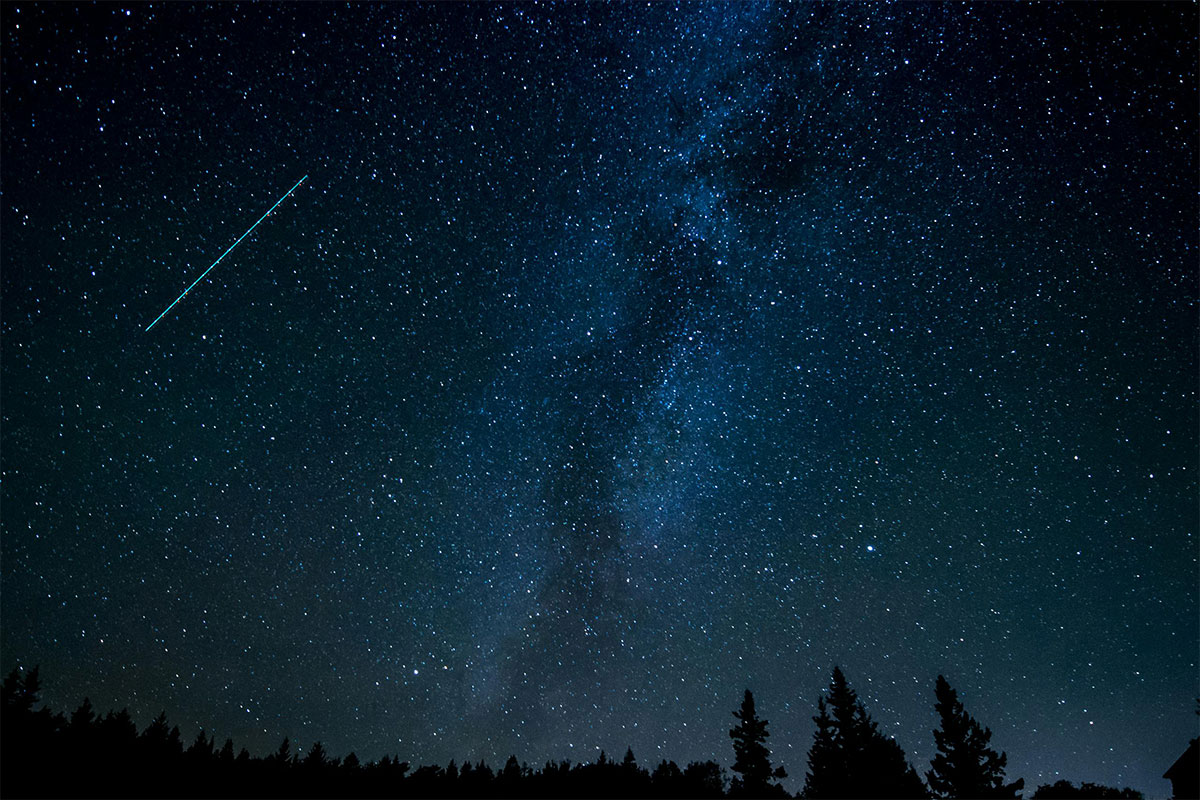
If I have the choice to make up my own eternity, I want a night sky filled with glowing stars, the ability to go any speed I choose, surrounded by those I care most about, with a heart full of love and happiness.
